Dogs vomit for lots of ordinary reasons. Eating too fast. A bit of grass. Something that did not agree with them. A single episode in an otherwise happy, energetic dog is usually nothing to worry about.The question is not whether your dog is vomiting -it is how often, what else is going on, and how your dog is behaving between episodes. Those three things tell us whether this is background noise or a signal to act on.
The Signs
Frequency, energy, and appetite.
A single vomit followed by normal behavior is usually fine. Multiple episodes in a few hours, a dog who becomes lethargic or hides, or vomiting that continues past a day -those are worth calling us about.Also watch what comes up. Undigested food shortly after eating is different from repeated bile-only vomiting hours after the last meal. Blood in vomit, foreign material, or vomit that smells strongly abnormal all warrant a call.
The Urgent Signs
Do not wait for these.
Repeated attempts to vomit that produce nothing, especially in large or deep-chested breeds, can be a sign of bloat -that is an emergency, and every minute matters.A hard, distended abdomen. Weakness or collapse. Vomit that contains large amounts of blood. Suspected ingestion of something toxic or a foreign object. Vomiting plus severe diarrhea in a puppy. Any of these means head to us or the ER immediately.
The Causes
More causes than most owners realize.
Dietary indiscretion. Foreign body ingestion. Infections. Parasites. Pancreatitis. Inflammatory bowel disease. Kidney or liver conditions. Cancer. The list is long, and the treatment for each is different.That is why watch-and-wait only works for short episodes in otherwise well dogs. When vomiting keeps happening, the important question is not what to give them -it is what is actually going on inside.
The Workup
We start with the basics, then look deeper.
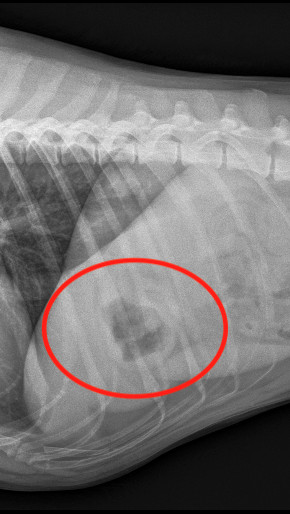
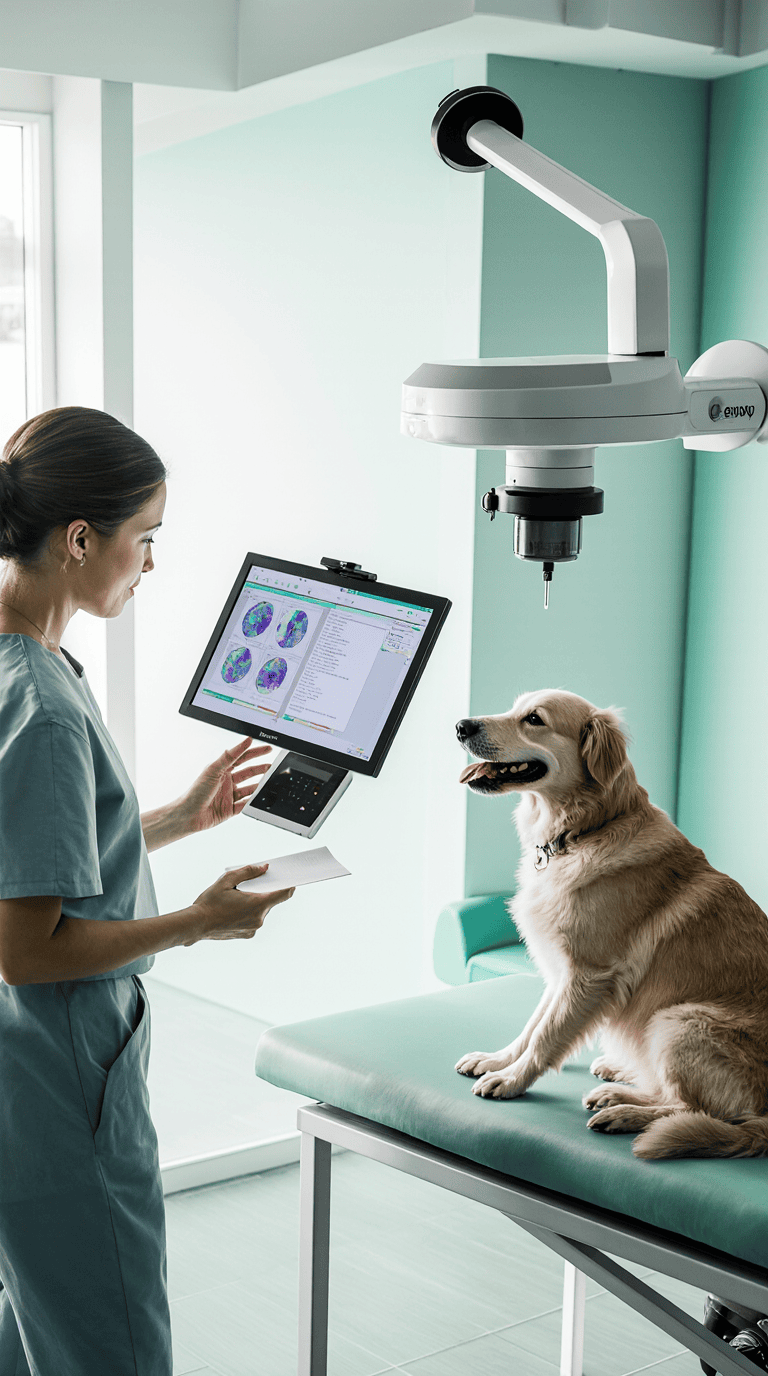
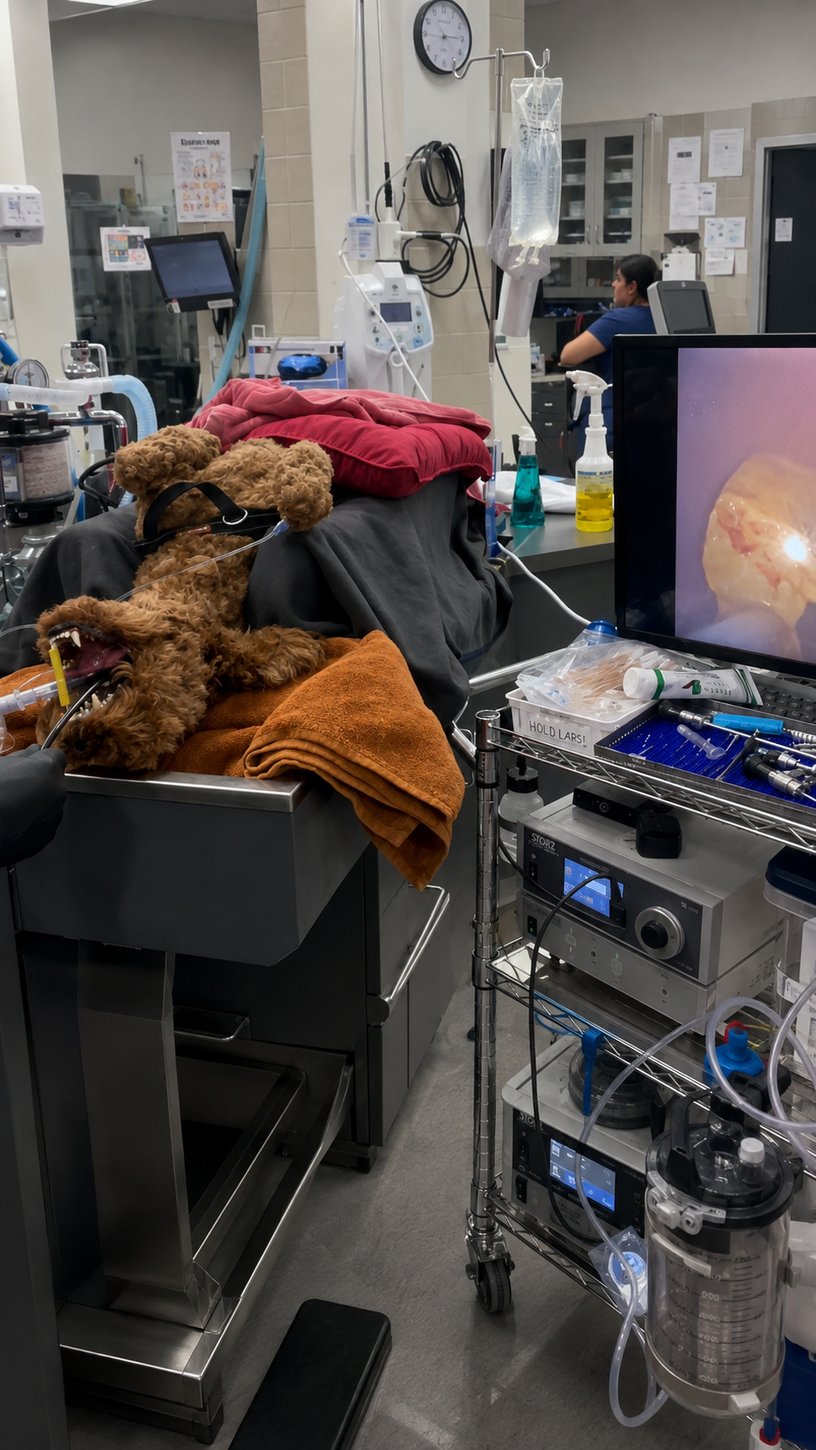
A physical exam and bloodwork give us the first picture. Imaging -radiographs and often ultrasound -shows us the stomach and intestines, catches foreign bodies, and reveals structural changes.When we need to look inside the stomach or upper intestine directly, endoscopy lets us pass a small camera down through the mouth. We can see the tissue, take biopsies, and in many cases retrieve foreign objects in the same procedure.
The Plan
Treatment matches the cause.
For dietary causes, we manage the current episode and often a diet change goes forward. For foreign bodies, endoscopy or surgery. For inflammatory conditions, targeted medication. For metabolic conditions, treating the underlying disease.Most dogs with resolved acute vomiting are back to normal within a day or two. Chronic causes take more work but almost always improve with the right diagnosis. The important thing is not the vomiting itself -it is finding what is causing it.
Frequently Asked Questions
When should I call the vet about vomiting?
Call if vomiting continues past 24 hours, if your dog becomes lethargic or stops eating, if you see blood in the vomit, if your dog has severe abdominal pain, or if you suspect they ate something they should not have. When in doubt, call.
What if my dog is throwing up and nothing comes out?
Repeated retching with nothing produced, especially in large or deep-chested breeds, can be a sign of bloat -a life-threatening emergency. Go to us or your nearest ER immediately. Every minute matters.
Can I give my dog something to stop the vomiting at home?
We do not recommend over-the-counter medications without checking with us first -some are dangerous for dogs, and stopping vomiting without knowing the cause can hide a bigger problem. A quick call gives you a much safer plan.
Go Deeper
The next step.
How we look inside -and what an endoscopic exam can find.