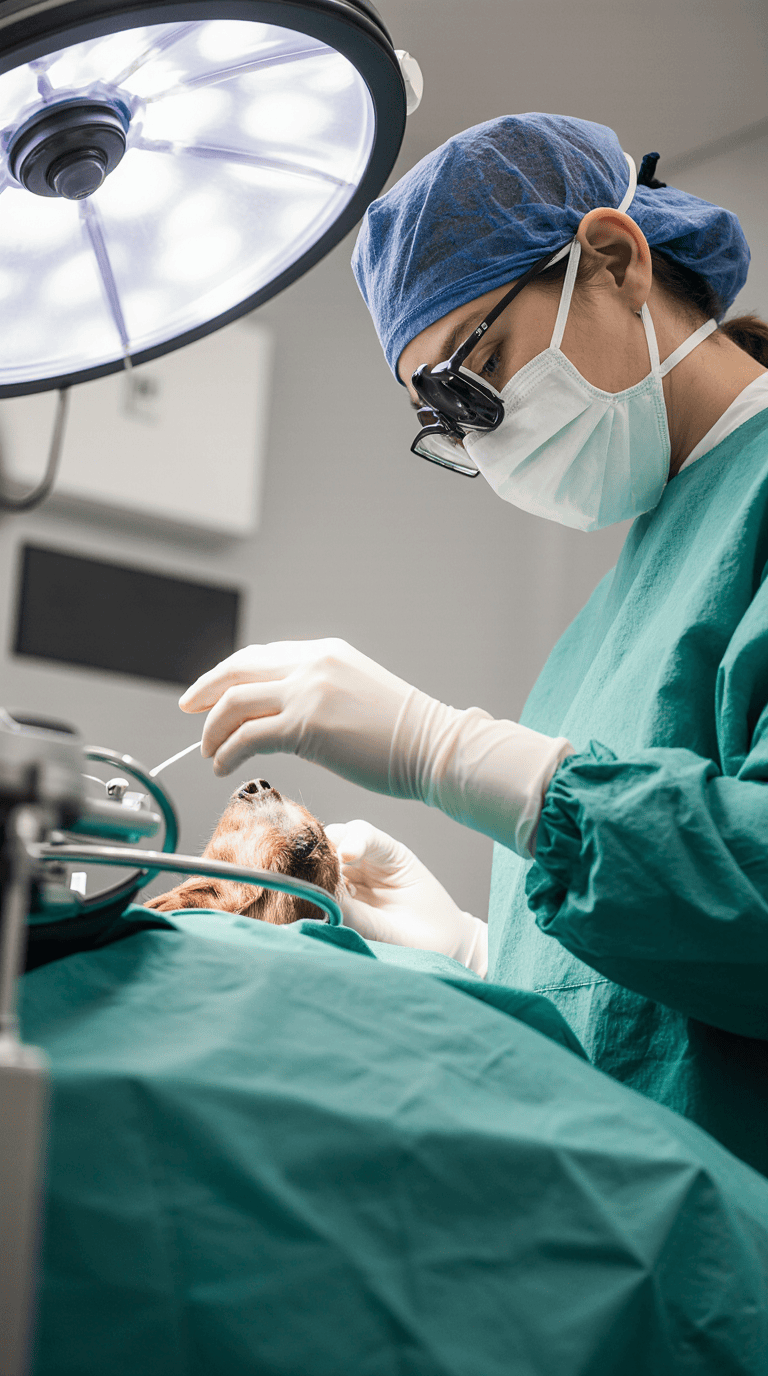
Traditional bladder stone surgery, called cystotomy, removes stones by cutting the abdomen open and the bladder open. It has been the standard for decades and it still works.Laser lithotripsy removes stones without any incision. A scope goes in through the urethra, a laser breaks the stones into dust, and the dust flushes out naturally. Same day home in most cases.
The Minimally Invasive Path
Scope in, dust out.
A small camera (cystoscope) enters through the urethra and gives us a clear view of the bladder wall and the stones inside. The thulium laser breaks each stone into fine dust -much finer than the fragments an older holmium laser leaves behind.We flush the dust out of the bladder in the same visit. No abdominal incision. No sutures to protect during recovery. Most pets go home comfortable the same day.
The Standard Surgery
Direct access to the bladder.
In a cystotomy, we make an incision through the abdominal wall to reach the bladder, then a second incision into the bladder itself. We remove the stones directly, examine the bladder wall, close the bladder with sutures, close the abdomen with sutures.It is a well-established procedure that remains the right answer for cases where lithotripsy will not work. When we need to remove very large stones or examine the bladder wall directly, cystotomy is what does the job.
The First Week
The difference shows up at home.
Lithotripsy recovery is typically a day or two of quiet time. No surgical incision, no sutures, minimal activity restriction. Most pets are back to normal quickly.Cystotomy recovery is more involved. Ten to fourteen days of restricted activity, e-collar wear, incision monitoring, and internal healing time. Both are safe procedures -but the day-to-day recovery experience is very different.
The Fit
It comes down to size and shape.
Most female dogs are excellent candidates for lithotripsy. Many male dogs and cats are too, depending on stone size, stone type, and the width of the urethra. Small stones and moderate burdens are ideal for the laser.Very large stone burdens, stones that will not fit through the urethra, or bladder walls that need direct examination still do better with cystotomy. After imaging, we can tell you honestly which fits your pet.
The Decision
Imaging first, then a real conversation.
We start with imaging -radiographs, ultrasound, sometimes both -to understand the stones and the anatomy. Then we walk you through what each approach would look like for your specific pet.For most cases where lithotripsy is possible, we recommend it. The comfort and recovery benefits are real. When cystotomy is the better answer, we say so directly. The goal is the right procedure for your pet -not the most impressive one.
Frequently Asked Questions
Is lithotripsy always the better choice?
For most eligible pets, yes -no incision, faster recovery, less pain. But some cases are better served by traditional cystotomy, depending on stone size, burden, and bladder condition. Imaging tells us which fits.
What if my dog isn't a candidate for lithotripsy?
Cystotomy remains a safe, well-established surgery that reliably removes stones. Recovery takes longer than lithotripsy, but the outcome is equally good. If your dog needs cystotomy, that is what we do.
How is recovery different between the two?
Lithotripsy is typically a day or two of quiet time with no incision to protect. Cystotomy is 10 to 14 days of restricted activity, e-collar wear, and incision monitoring. Both patients heal well -the day-to-day experience differs.
Go Deeper
The procedures.
Read how each approach actually works, step by step.